






Why Villa Architecture Changes the Job
A Dubai villa isn't built the same way twice, and that variation matters more than most people expect when it comes to moving one. Older villas in established communities like Jumeirah or Al Barsha were often built independently, plot by plot, which means wardrobe sizes, staircase widths, and ceiling heights can differ from one property to the next even on the same street. Newer master-planned communities are more standardised, but they bring their own quirks: taller ceilings in show-home-style villas, double-height entrance halls that need extra care when moving large mirrors or artwork, and marble flooring throughout that's genuinely easy to chip if furniture is dragged rather than lifted.
We've found that the villas causing the most surprises on moving day are the ones where a previous owner or tenant made changes after the original build, a carpenter-fitted wardrobe added years later, a converted maid's room, a garden room extension. None of these show up on a floor plan, and they're exactly the kind of detail a proper pre-move survey is designed to catch.
What Actually Drives the Cost
Most quotes look similar at first glance because most companies are pricing against the same rough inputs: bedroom count, floors, and distance. What actually separates a AED 2,000 job from a AED 4,500 job is usually invisible until someone walks the property. A villa with three built-in wardrobe systems needing careful dismantling costs more in labour hours than one with flat-pack furniture, regardless of the bedroom count being identical. A garden with a full outdoor dining set, planters, and a shed's worth of tools adds volume that a bedroom-based estimate won't capture. And a villa on a cul-de-sac with a tight turning circle for trucks sometimes needs two smaller vehicles instead of one large one, which changes the crew structure entirely.
This is really the reason a proper quote takes a conversation or a site visit rather than a form you fill in online. Two five-bedroom villas can be genuinely different jobs, and pricing them identically does a disservice to whichever customer ends up paying for the other one's complexity.
Community Access, Community by Community
Dubai's major developers each run access differently, and this is worth understanding before your moving date is locked in. Emaar communities such as Arabian Ranches, The Springs, and Dubai Hills typically require a move-in or move-out permit submitted through community management, usually alongside a refundable security deposit that covers potential damage to shared areas like driveways or gates. Nakheel developments, including Palm Jumeirah and Jumeirah Park, tend to have stricter timing windows, particularly on the Palm's fronds, where truck access outside certain hours can simply be refused at the checkpoint. Newer developments like Damac Hills and Tilal Al Ghaf are still building out their management processes, which sometimes means slower turnaround on permit approvals simply because the systems are newer.
None of this is difficult to navigate once you know it's coming. The problems arise when a moving date gets fixed before anyone has checked what a specific community actually requires, and a truck ends up waiting at a gate with paperwork that hasn't been approved yet.
Choosing a Moving Date Around Dubai's Calendar
Two things drive demand for villa relocations in Dubai more than anything else: the school calendar and the summer heat. Families overwhelmingly try to move in the weeks before the September school term starts, which means late August is consistently the busiest and hardest-to-book stretch of the year. A secondary spike happens around the June school-year end, when families relocating internationally or switching communities try to complete the move before summer travel begins.
Heat is the other factor, and it affects the work itself, not just demand. Outdoor items left in direct sun during a midday loading window can reach surface temperatures that damage certain plastics and finishes, and crews working through a full villa in peak summer heat need more frequent breaks, which can extend a job that would otherwise finish in a single day. Booking early morning slots, starting as close to sunrise as a community's access hours allow, tends to produce a smoother result during the hottest months, both for the crew and for anything being carried in the open.
What Actually Happens During a Professional Pack
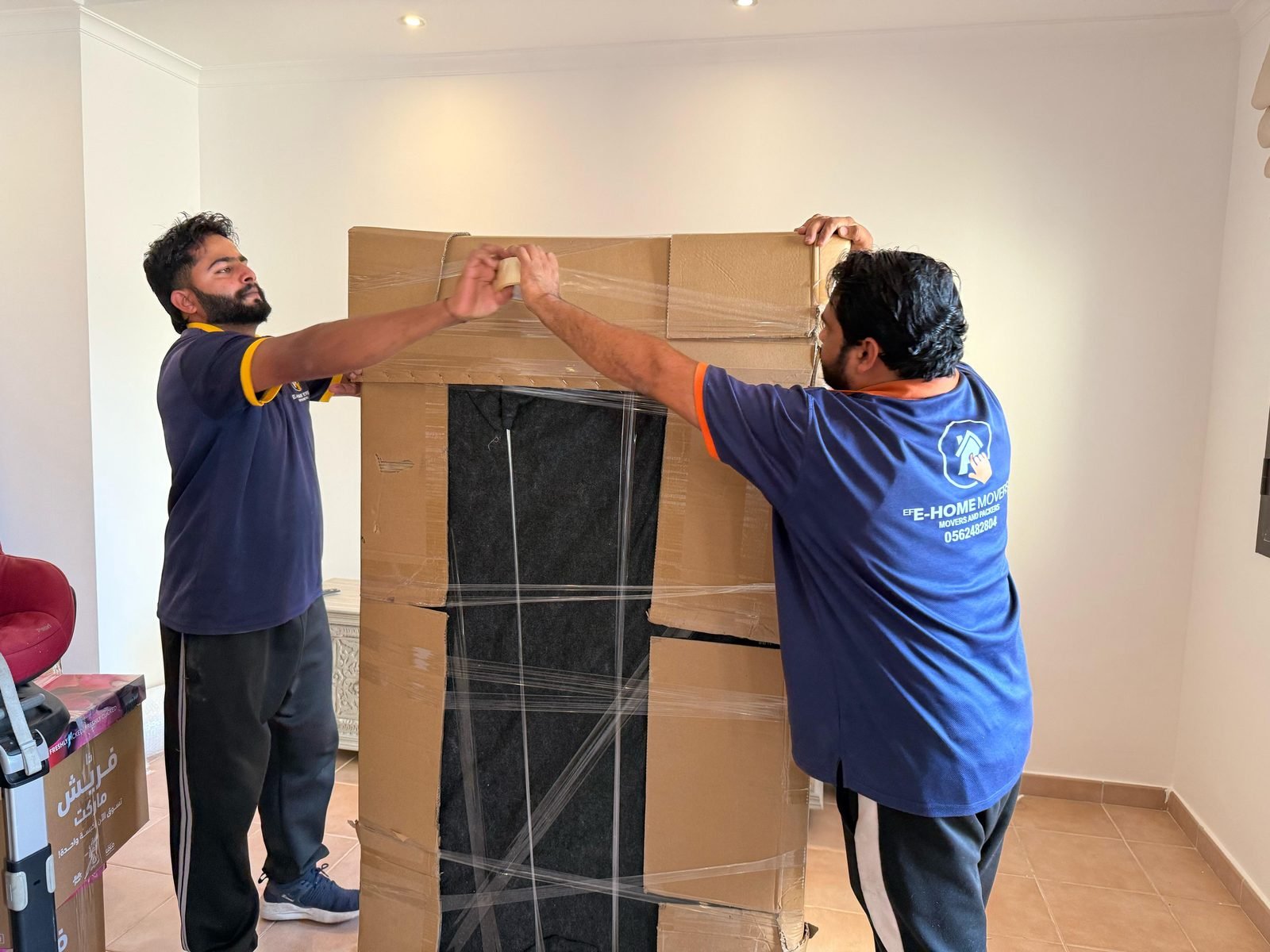
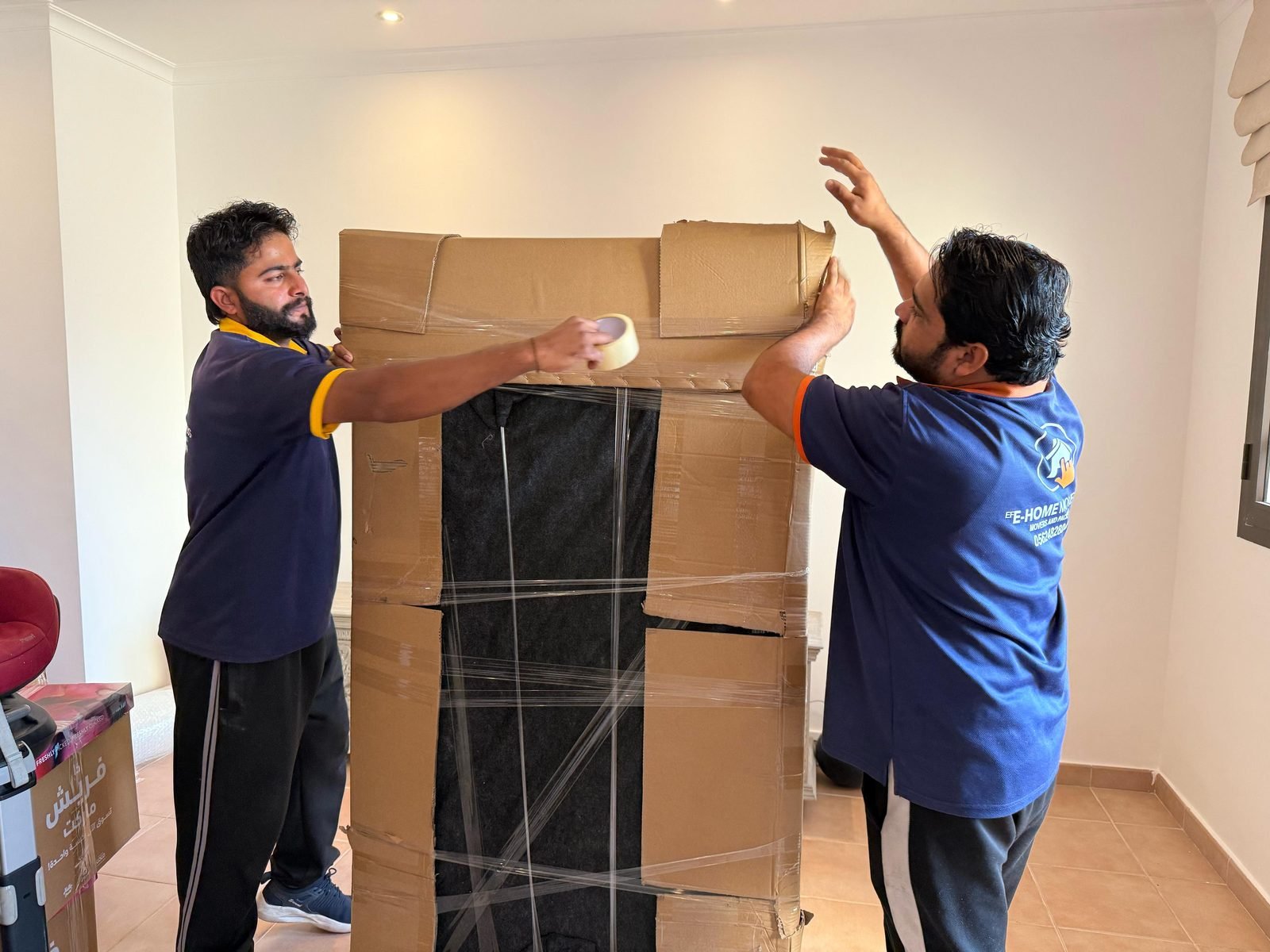
Packing a villa properly is less about wrapping things quickly and more about wrapping the right things the right way. Glassware and ceramics get individually wrapped in packing paper before being placed upright in dish-pack cartons with dividers, never flat and never loose. Wardrobe boxes, tall cartons with a hanging rail built in, let clothes travel on their hangers rather than being folded and re-ironed at the other end. Mattresses go into dedicated mattress covers rather than blankets alone, since blankets shift and expose corners to dirt and damage during loading.
The detail that surprises people most is how much material goes into protecting furniture that looks sturdy. A solid wood dining table still gets corner guards and a full blanket wrap, because scuffing happens far more easily during loading and unloading than most people assume, particularly when a piece is being carried through a doorway at an angle.
Furniture Disassembly and Reassembly, in Practice
Wardrobes, beds, and modular furniture are dismantled following the reverse of how they'd typically be assembled, doors and drawers first, then internal shelving, then the frame itself. Screws, brackets, and small fittings are bagged and labelled by piece rather than pooled together, since a single mixed bag of hardware from a multi-wardrobe villa can turn a straightforward reassembly into a lengthy sorting exercise at the other end. For furniture that was built in place by a carpenter rather than bought flat-packed, photographing the assembly before it comes apart is standard practice, since there's often no manual to refer back to.
Reassembly at the new villa follows the same process in reverse, and it's usually completed the same day for a single-day move, with beds specifically prioritised so the property is genuinely liveable by the time the crew leaves rather than functional in name only.
Insurance and Liability, Explained Plainly
Goods-in-transit insurance covers items while they're being packed, loaded, transported, and unloaded, and it should be included as standard rather than presented as an upsell partway through booking. What it typically doesn't cover automatically is the full replacement value of exceptionally high-value items, art, antiques, a grand piano, without a declared-value arrangement made in advance. This matters because a general policy usually caps compensation per item at a standard rate, which can fall well short of an antique's actual worth if it's damaged without prior declaration.
The practical takeaway is simple: if a villa contains anything genuinely irreplaceable or expensive, it's worth a direct conversation about coverage before moving day, not an assumption that "insurance" means the same thing for every item in the house.
The First 48 Hours After Moving In
The work isn't really finished when the truck pulls away. The first two days in a new villa are when small issues either get caught and fixed or get absorbed into daily life and never addressed. Walking every room with a checklist, confirming furniture placement matches what was agreed, testing that DEWA and any smart-home systems are active, and checking reassembled furniture for stability before it's loaded with belongings, all of this is worth doing methodically rather than piecemeal over the following weeks.
This is also the point where garden and pool areas deserve their own check, particularly for families with young children or pets, confirming gate latches work, boundary fencing is intact, and nothing from the move has been left propped against a wall where it could fall. A villa move that's handled well doesn't just end at delivery, it ends once the new house genuinely works the way the family living in it needs it to.
Sizing the Crew Correctly
Crew size is one of the least visible decisions in a relocation quote, and it's also one of the most consequential. A three-bedroom villa with straightforward access might move comfortably with four people in a day. The same size property with a narrow staircase, a second-floor majlis, and heavy stone furniture can genuinely need six or seven to finish in the same window, simply because more hands are needed to carry awkward pieces safely rather than working through them one at a time. Under-crewing a job doesn't just slow it down, it increases the odds of a rushed lift causing a scrape, a dropped corner, or a strained back, none of which anyone wants on moving day.
A useful question to ask any company at the quote stage is simply how many people they're planning to send and why that number, rather than accepting a figure without context. A confident, specific answer, tied to your actual floor plan rather than a generic bracket, is usually a good sign the survey was taken seriously.
When Storage Bridges the Gap
It's common for a move-out date and a move-in date to not quite line up, sometimes by days, occasionally by weeks. Short-term storage exists specifically for this gap, and the details worth checking before using it are whether it's climate-controlled, since Dubai's heat and humidity can affect wood, leather, and electronics over an extended period, and whether the facility keeps an itemised inventory rather than a rough pallet count. A well-run storage handover means the same crew that packed your villa can also deliver it out of storage later, without a second company needing to re-learn what's actually in each box.
Storage is also worth considering deliberately rather than only as an emergency fallback. Families renovating a new villa before moving in, or waiting on a tenancy contract to formally begin, often plan a short storage period in from the start rather than trying to force two dates to align exactly.
Questions Worth Asking Before You Sign
A short list of direct questions tends to reveal more about a company than a long conversation about price alone. Is the trade licence current and easy to verify. Is the quote written and itemised, or a single flat number with no breakdown. Does the crew include someone experienced with dismantling, not just general labour. Is insurance included as standard, and what's the process if something is damaged. Will the same people who load the truck also be the ones unloading it, or does the job change hands partway through.
None of these questions are unusual to ask, and a company confident in its own process will usually answer them plainly and quickly. Hesitation or vagueness on any of them is worth treating as useful information in itself.
Why Experience Shows Up in the Small Decisions
Fifteen years of doing this work in one city teaches you things that don't show up in a general moving checklist. It's knowing which Arabian Ranches clusters have tighter internal roads before a truck gets stuck trying to turn around. It's recognising a 1990s Jumeirah villa's original wardrobe joinery well enough to know it needs a different dismantling approach than a modern flat-pack unit. It's understanding that a Ramadan moving schedule needs to work around shorter daylight working hours, or that a Friday move in a family-heavy community means quieter streets but a narrower afternoon window before prayer time affects access.
None of this is complicated once you've seen it enough times, but it's genuinely difficult to fake if you haven't. That's really the difference experience makes: not a dramatic one, but a steady accumulation of small, specific decisions that add up to a move that goes the way it was planned to, rather than one that's improvised on the day.